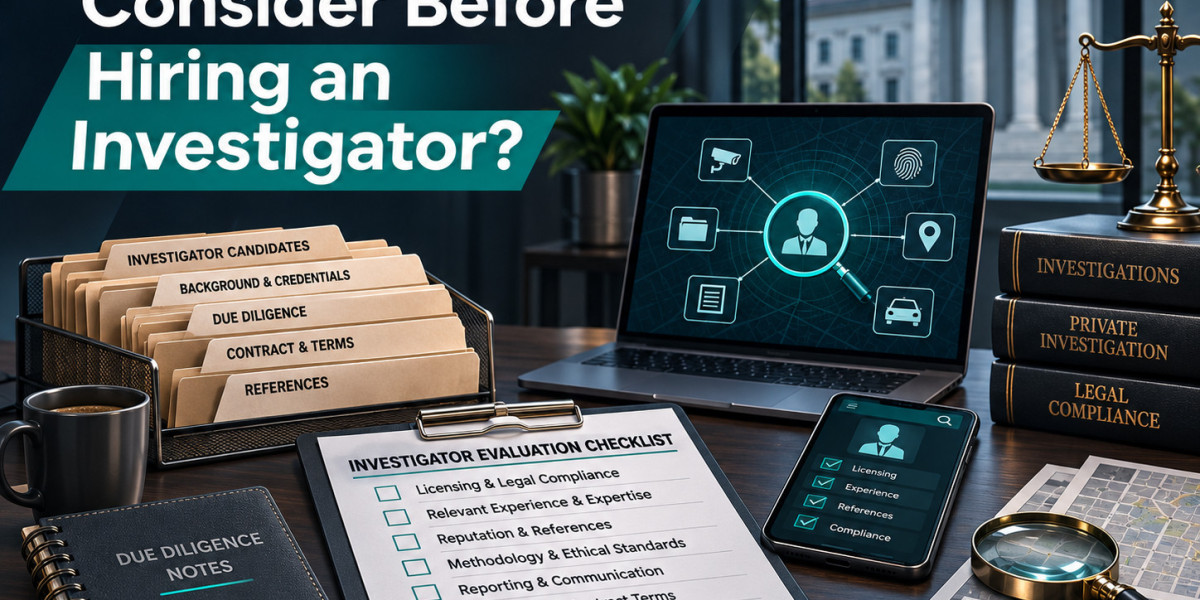

Hiring a private investigator requires more than finding someone who advertises research or surveillance services. The right professional should understand your objectives, explain lawful methods, and document findings accurately. A business considering a company fraud investigation, for example, may need experience examining transactions and interviewing witnesses rather than general background research alone. Evaluating qualifications, privacy practices, pricing, and reporting standards helps clients choose an investigator whose work is useful, responsible, and suited to the assignment.
Why Choosing the Right Investigator Matters
Private investigations involve sensitive information and sometimes disputed allegations. Poorly verified claims can damage reputations, complicate litigation, or lead clients toward mistaken decisions. Professional investigators distinguish confirmed facts from unverified leads and recognize situations requiring an attorney, forensic specialist, or law enforcement involvement.
Start by defining the question you need answered. Locating a witness, examining workplace misconduct, and documenting property damage demand different techniques. A clear objective allows candidates to discuss relevant experience, realistic limitations, and the likely scope of work without promising particular results.
Important Factors to Consider When Choosing a Private Investigator
Several practical considerations deserve attention during initial consultations:
Licensing and credentials: Check whether the investigator and agency hold licenses required where they operate, and confirm current status through the appropriate authority.
Relevant experience: Ask about comparable assignments, specialized training, and familiarity with the records or evidence involved in your case.
Legal compliance: Discuss privacy rules, surveillance restrictions, recording laws, and the procedures used to obtain information legitimately.
Confidentiality safeguards: Ask who can access case materials, how information is transmitted, and what happens to records after the assignment ends.
Transparent pricing: Request written billing terms covering hourly work, retainers, expenses, minimum charges, and authorization for additional services.
Reporting quality: Review a redacted sample report to assess source documentation, factual accuracy, organization, and treatment of uncertainty.
An investigator's willingness to explain these matters is often more informative than broad claims about success rates or access to exclusive information.
How to Evaluate an Investigator's Experience, Services, and Professional Standards
Confirming Licensing and Appropriate Qualifications
Licensing rules differ by state and country, and certain investigative activities may carry additional requirements. Verify credentials independently instead of relying only on a website or business card. Professional memberships or certificates can indicate training, but they do not replace mandatory licenses. Ask who will perform the work, especially when an agency uses subcontractors or sends investigators across jurisdictional boundaries.
Matching Experience to the Assignment
Relevant expertise should align with the issue being examined. Financial misconduct cases may involve transaction analysis and document review, while witness location work depends on identity verification and lawful contact methods. Ask candidates to describe their investigative approach without revealing confidential client details. Their response should identify possible obstacles, alternative sources, and the circumstances under which specialist support may be necessary.
Reviewing Confidentiality and Legal Boundaries
Clients should understand how investigators protect names, communications, records, and other sensitive details. Secure storage, restricted access, and agreed retention procedures reduce unnecessary disclosure. Discuss legal limits explicitly: paying an investigator does not authorize hacking accounts, obtaining protected financial records through deception, or harassing individuals. Attorneys should review assignments involving litigation, represented parties, or potentially privileged material.
Comparing Fees and Reporting Practices
A useful estimate identifies the proposed tasks, billing structure, likely expenses, and circumstances that might change the budget. Investigations are unpredictable, so responsible professionals avoid guaranteeing findings within a fixed number of hours. Request periodic updates and approval thresholds for new work. Final reports should identify sources, dates, methods, corroborating information, and unresolved questions, allowing clients or counsel to assess conclusions independently.
For complex matters, discuss whether the investigator can testify about collection procedures and whether supporting records will remain available for later review.
Questions to Ask During an Initial Consultation
A consultation should establish expectations about communication and deliverables. Ask who will serve as your main contact, how often progress updates are provided, and what evidence will be included in the final report. Discuss what the investigator will do if a lead proves inaccurate or the original objective becomes impossible. Written agreements should define scope, confidentiality, fees, and procedures for changing instructions.
Clients should also be cautious about guarantees of secret database access or promises to deliver a predetermined outcome. Ethical research may uncover information that challenges the client's assumptions. Professional independence makes those findings more dependable.
Conclusion
Choosing an investigator involves checking credentials, matching experience to the task, and establishing clear expectations for lawful methods, confidentiality, cost, and documentation. A carefully defined assignment and transparent agreement help prevent misunderstandings. The most useful investigator is not the one offering certainty, but the one who reports verified facts, acknowledges limitations, and provides information clients can evaluate responsibly.