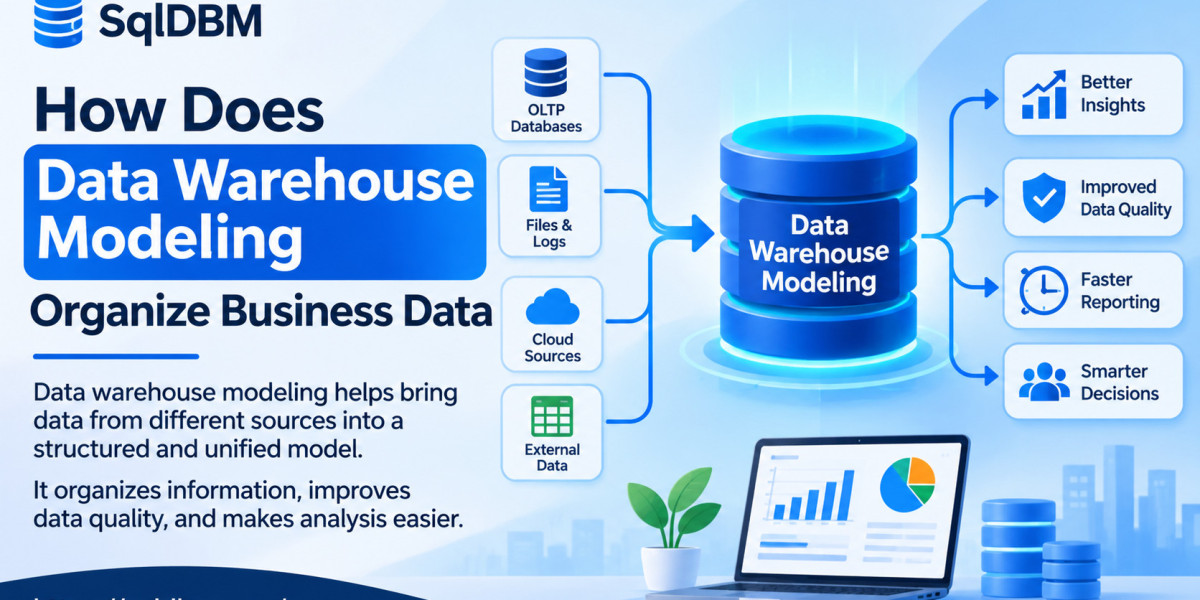

Data warehouse modeling plays an important role in organizing business data from multiple sources. It helps companies bring information from databases, applications, cloud platforms, and other systems into a structured and centralized environment.
By creating clear data models, businesses can organize information into tables, dimensions, and facts. This structure makes it easier to understand relationships between different datasets and maintain consistent information across departments.
A well-designed data warehouse model also improves data quality by reducing duplication and maintaining accuracy. It allows teams to access reliable information, generate reports faster, and analyze business performance more effectively.
Data warehouse modeling supports better decision-making because employees can work with organized and meaningful data instead of searching through disconnected systems. It also helps businesses manage growing data requirements as their operations expand.
Tools like SqlDBM make database modeling easier through visual design, collaboration, and support for modern data platforms. With a clear modeling approach, organizations can build a reliable data foundation for reporting, analytics, and long-term business growth.









